Back to Work, Back to Basics: Why September Is the Right Time to Review Staff Safety Training
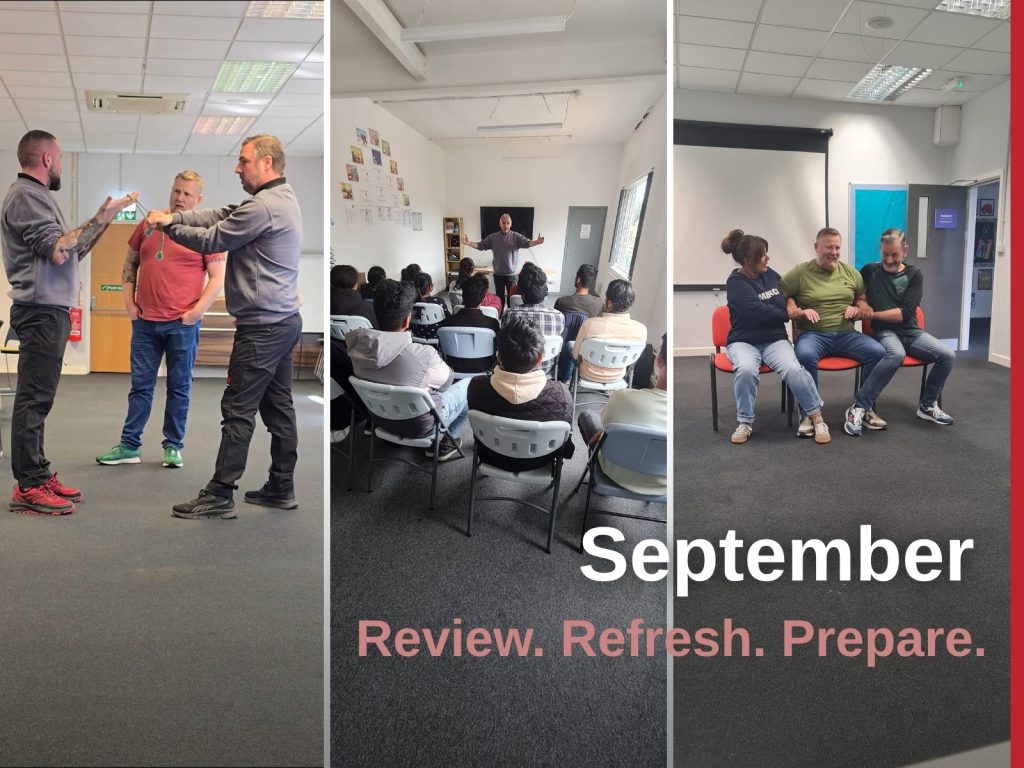
September often feels like a second start to the year, Summer leave comes to an end, teams return to more regular routines, new starters arrive and organisations begin looking seriously at the final few months of the year.
It also makes it a good time to ask a fairly simple question: if a difficult situation happened tomorrow, would your staff genuinely know what to do?
For organisations where staff may face aggression, challenging behaviour or physical confrontation, having a policy in place is only part of the answer. People need to be able to recognise when a situation is changing, communicate effectively under pressure and know what options are available to them before an incident escalates.
That remains a very real workplace issue. Health and Safety Executive figures estimate there were 689,000 incidents of violence at work in 2024/25, including 370,000 assaults and 319,000 threats. Around 329,000 working adults experienced at least one incident of workplace violence during the year.
For Nick Attard, General Manager at BR Specialists, the important point is that training should prepare people for the situations they may genuinely encounter, rather than simply satisfy a requirement on paper.
“You can have a very good policy sitting in a folder somewhere, but when somebody is angry, frightened or becoming aggressive, the member of staff in front of them has to make decisions in real time. Training gives people something practical to fall back on when that pressure arrives.”
A September safety reset
Teams change over time. Experienced members of staff leave, new people join, working practices evolve and even people who have previously received good training can gradually forget elements of it.
That is why September can be a useful point to take stock.
It does not necessarily mean starting everything again. It may simply mean looking at where the risks currently are, who has joined the organisation, when staff were last trained and whether the training they received still reflects the situations they face today.
A useful review might look something like this:
| Area to review | Questions to ask |
|---|---|
| New starters | Have they received appropriate conflict management and personal safety training? |
| Existing staff | When was their last practical training or refresher session? |
| Current risks | Have the situations staff encounter changed during the past year? |
| De-escalation | Are staff confident recognising warning signs and responding early? |
| Personal safety | Do people understand positioning, distance, escape routes and when to disengage? |
| Physical intervention | Where it is required, are techniques proportionate, practical and regularly refreshed? |
| Incident learning | Have recent incidents identified gaps that training could address? |
One of the biggest differences between simply knowing a procedure and being properly prepared is the ability to apply it when somebody is under pressure.
Effective training should therefore go beyond telling people what the rules are. Staff need opportunities to think through realistic situations, practise communication and understand how their own actions, positioning and body language can affect an interaction.
Where physical skills are appropriate to a role, those skills should also be realistic, as Nick explains:
“We are not trying to turn people into fighters. Quite the opposite. Good training is about giving somebody more options. We teach techniques where physical size and strength matter far less, alongside the awareness and confidence to recognise when they need to act, when they need to disengage and when they can prevent the situation reaching that point in the first place.”
That confidence can make a difference long before any physical intervention becomes necessary – Someone who understands warning signs may identify escalation sooner. Someone who understands personal space and positioning may avoid becoming trapped. Someone who has practised de-escalation is more likely to remain composed enough to communicate clearly.
The aim is not to make staff expect confrontation. It is to remove some of the uncertainty if it does occur.
Training for the workplace you actually have
A September review is also an opportunity to question whether existing training still matches the organisation. A care worker dealing with a distressed resident faces a very different set of circumstances from a member of hotel staff dealing with an intoxicated guest. A healthcare worker, teacher, security officer and lone worker will each have different risks, responsibilities and environments.
Training is most effective when those differences are recognised. For BR Specialists, that means adapting training around the people attending it and the situations they may encounter, rather than simply working through a generic set of techniques.
Nick says:
“The conversations we have with organisations before the training are important. We want to know what their staff are actually dealing with. If there have been incidents, changes in the team or particular situations people are worried about, that helps us make the training relevant to them.”
September does not need to mean a complete overhaul of your training programme. But it is a useful moment to stop, look at what has changed and make sure the people representing your organisation on the frontline have the knowledge, confidence and practical skills they need.
Waiting until after a serious incident to discover where the gaps are is rarely the best way to find them.
If you are reviewing staff training for the autumn and winter, BR Specialists can help you identify the right approach for your organisation. From conflict management and de-escalation through to personal safety, physical intervention and bespoke training programmes, contact our team to discuss what your staff are facing and how we can help prepare them.